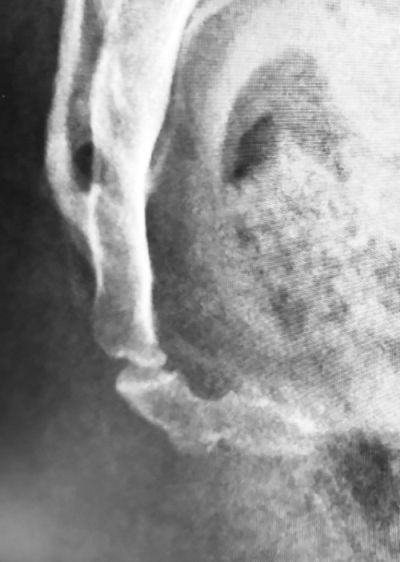
Coccygectomy experience – 42-Year-Old male (image included)
Tim, Oklahoma, USA
Posted 2026-01-11
I wanted to share my experience having my entire coccyx removed in case it helps someone else considering this surgery. I’ve included an image of my X-ray for reference. My surgeon, Dr Tyler Boone (see Doctors and specialists in the USA, Oklahoma) explained that I had significant abnormal movement and angulation of the coccyx, which was likely the main source of my pain. Looking back, this makes sense — the pain pattern felt very similar to sciatic nerve pain but was more localized in the buttocks, originating at the tailbone and spreading outward rather than running down the leg. My issues started after a fall, and the abnormal angle of the coccyx was probably the reason the pain never resolved on its own.
The surgery itself took about one hour, and I was admitted to the hospital overnight for observation. I was discharged the following day. Recovery honestly wasn’t as bad as I expected. The worst of the pain was around days three to four, and after that things steadily improved. I was able to get off prescription pain medication around a week and a half post-op and transitioned to over-the-counter Tylenol, which actually worked better for me than ibuprofen.
One of the biggest positives so far is that most of the lower back pain I had before surgery is gone. What I’m dealing with now is more localized surgical pain, centered around the incision and the area where the coccyx was removed. That pain feels very different from the pre-surgery pain and clearly feels like healing rather than nerve irritation.
The incision itself was small but located very close to the anus, which made wound care especially important and helped me understand why infection rates can be higher with this surgery. I was given waterproof dressings and changed them nightly. I was able to shower by day three. There was some light pink drainage on pads as the incision healed, but no signs of infection. I was also sent home with oral antibiotics as a preventative measure. The surgeon used two layers of stitches — internal dissolvable sutures and external traditional stitches, which were removed at my two-week post-op appointment.
Because pain medication shut down my pelvic floor — which was already weak — I needed a catheter, and I wasn’t able to urinate normally for about a week. Stool softeners were essential, especially while on pain meds, to avoid straining. I really believe having someone help with dressing changes is important. My wife is a nurse and handled mine, and that made a huge difference in both comfort and peace of mind.
Sleeping on my side has helped a lot, and during the day I either lie on my side on the couch or use a firm cushion. Before surgery I tried a zero-gravity chair, which had been recommended to me, but it didn’t help at all. I’ve learned that any pressure on the incision is bad, even if it feels evenly distributed. Walking has helped more than anything — frequent, gentle walks made a noticeable difference in recovery.
I was able to return to work at two weeks post-op, working from home using a standing desk. Car rides are manageable, but I do get sore after about 30–45 minutes. I expect to be fully back to normal work around week four.
I’m a healthy 42-year-old male, non-smoker, with a good immune system, and I think that’s a big reason I’m recovering quickly and ahead of schedule. I can easily see how someone who smokes, has a weaker immune system, or is older might have a more difficult or slower recovery.
Overall, I’m very glad I had the surgery. It addressed the root cause of my pain, and the recovery has been manageable with the right precautions. Walk often, avoid pressure at all costs, stay ahead of constipation, and get help with wound care if you can. All good in the hood.